.svg)
The State of M&A in 2026 And How You can Prepare
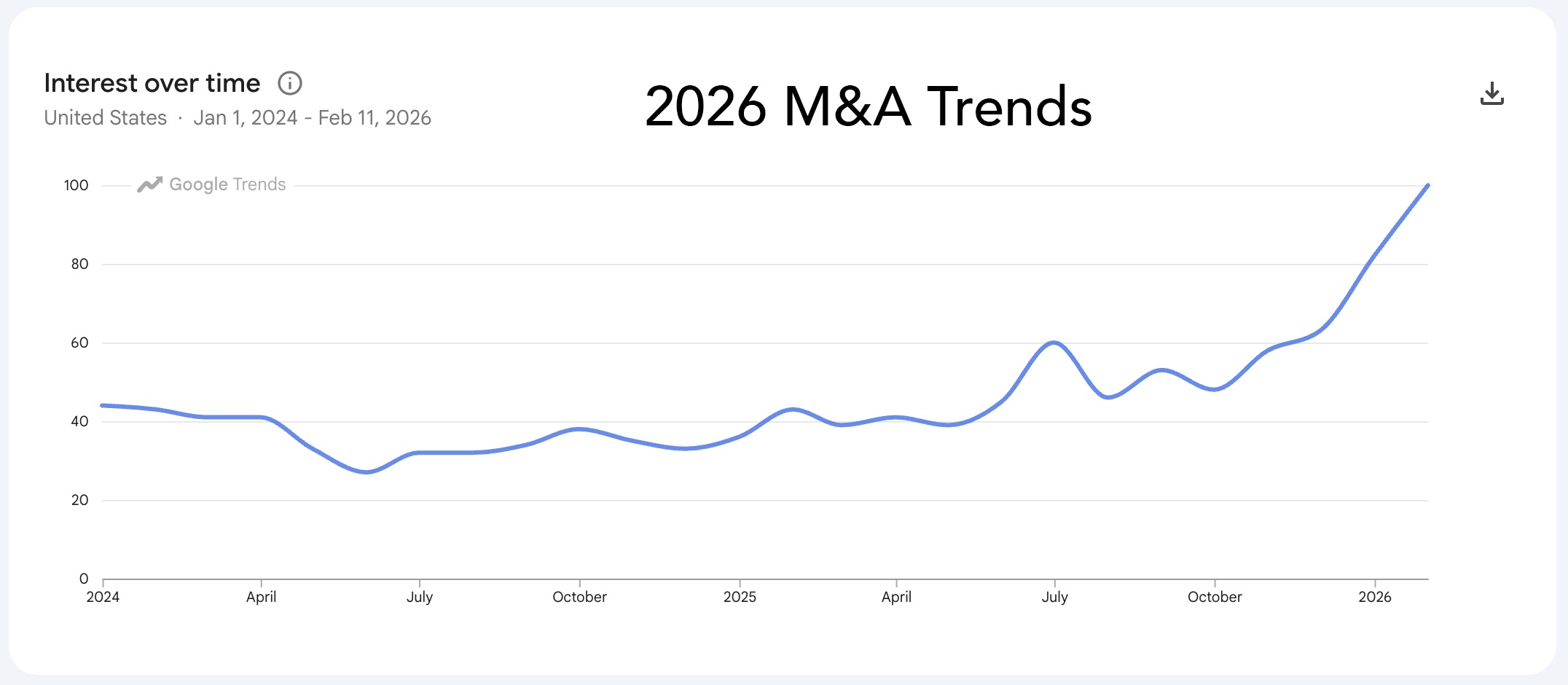
The M&A market in 2026 is active, but it is not a free-for-all. It is best described as selective, strategic, and increasingly disciplined. Large firms, private equity groups, and strategic buyers are still pursuing acquisitions, but they are doing so with sharper focus on profitability, resilience, technology, and integration risk. That matters for small businesses because even when headline deal volume is uneven, well-positioned smaller companies can still attract serious buyer interest. Recent 2026 outlooks from PwC, Deloitte, Bain, KPMG, and EY all point to broadly positive sentiment, but with continued caution around macroeconomic uncertainty, financing costs, policy shifts, and execution risk.
One of the biggest themes this year is that buyers are prioritizing quality over quantity. PwC expects deal value to remain elevated in 2026 even if volumes stay relatively muted, while Deloitte reports that more than 80% of surveyed dealmakers expect higher deal activity than in 2025, though with more tempered expectations than last year. EY similarly notes that some sectors began 2026 with fewer and smaller deals, even as technology and aerospace showed strength and the overall outlook remained constructive. For small business owners, the message is clear: buyers are still buying, but they are more selective about what they buy.
Another important factor is capital availability. Private equity remains motivated to deploy capital, and several 2026 outlooks note improving financing conditions, stabilizing rates, and pressure to exit or invest after a slower period. That creates opportunity for small businesses that can show predictable earnings, strong customer retention, and a credible growth story. Buyers are not just looking for revenue anymore. They want operational maturity, clean financials, defensible margins, and confidence that the business can scale without surprises.
So how should a small business prepare?
First, get your financial house in order. That means accurate books, clean profit-and-loss statements, documented add-backs, and a clear explanation of revenue trends. Second, reduce owner dependency. A business that relies too heavily on one founder is harder to buy and harder to integrate. Third, tighten contracts, compliance, and documentation. Buyers will examine customer concentration, vendor terms, employment agreements, data practices, and any regulatory exposure. Fourth, invest in systems and reporting. Even small companies benefit from demonstrating repeatable processes and reliable KPIs. Finally, know your story. In 2026, buyers are paying for businesses that can explain not only what they have done, but why they are positioned to grow in a changing market.
The bottom line is that 2026 is not a bad year to consider M&A as a small business. It is a year that rewards preparation. The businesses most likely to command attention are not necessarily the biggest. They are the ones that are organized, credible, resilient, and ready for diligence. In a selective market, preparation is not optional. It is leverage.
Continue Reading




Confidence in M&A and Strategy leads to effective business results.
BTA partners with investors and operators to assess technology risk, execute AI-driven value creation, and provide hands-on technology leadership through critical stages of growth and M&A. Contact us today to learn more.